


Fortal Fortaleza: Brazil's Biggest Micareta Explained

When people think about Brazil's Carnival, one city instantly comes to mind: Rio de Janeiro. But what if we told you one of the country's biggest street parties happens months later—and in a completely different region? Fortal - Brazil is the largest micareta in the country and takes place every year in Fortaleza, Ceará. Surprisingly, many international travelers have never heard of it. If you're planning a trip to Brazil — or visiting during the 2027 FIFA Women's World Cup — this guide will show you why Fortal deserves a place on your itinerary.
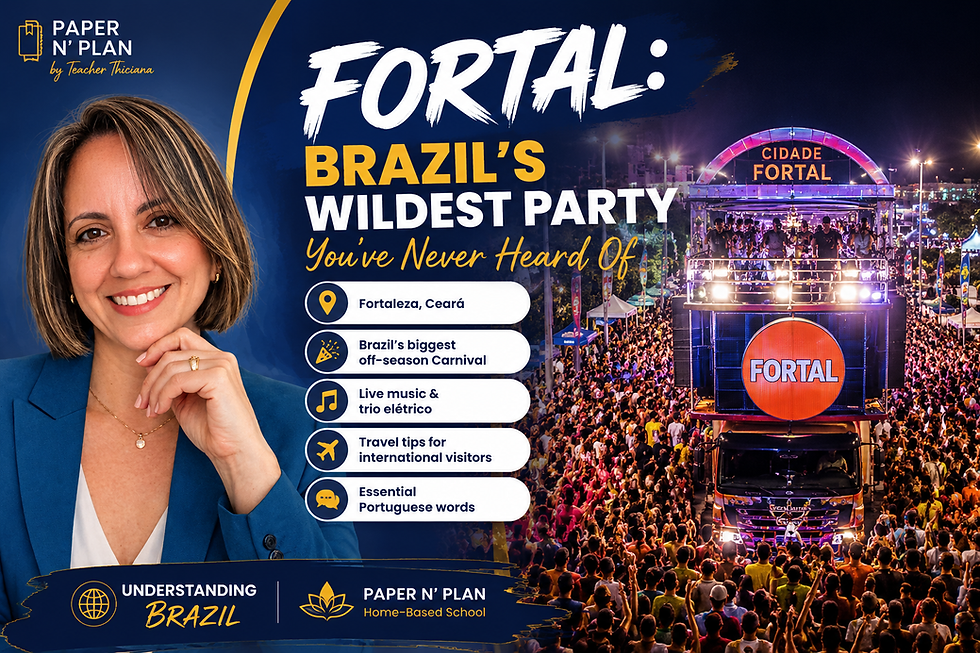
What Is Fortal - in Brazil?
It's a Micareta
Fortal is what Brazilians call a micareta — a Northeastern Brazilian term for a multi-day street festival built around live bands performing on massive sound trucks (called trios elétricos) that move through closed-off streets while crowds dance alongside them. Unlike a stationary concert, the music literally travels through the city.
Fortal - It's "Carnaval Fora de Época" (Carnival Out of Season)
Fortal belongs to a category of Brazilian festival called carnaval fora de época — literally "carnival outside its season." Instead of happening in February/March like traditional Carnaval, these festivals are deliberately scheduled at a different time of year, which lets a city throw a second, equally massive party without competing with Rio or Salvador's calendar. Fortal happens every late July.
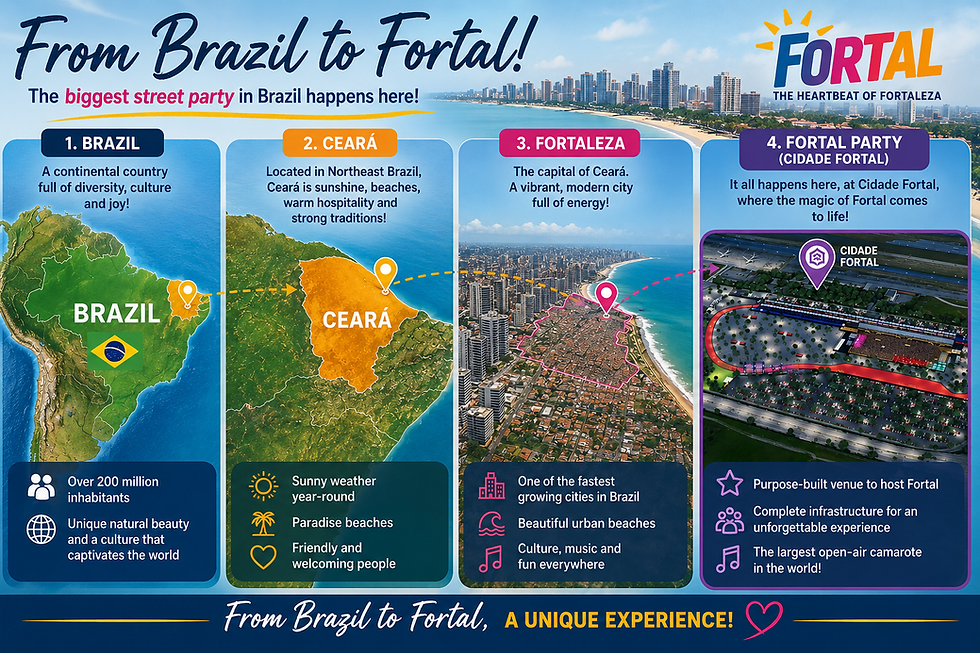
Its History
Fortal was created in 1992 by businessmen Célio Guimarães and Ailton Júnior, inspired by Salvador's Carnaval, though it developed its own identity in Fortaleza. The very first edition was modest: just one bloco (called Araboneco), led by the Bahian band Cheiro de Amor, with two days of celebration on Avenida Beira Mar and no grandstands or VIP boxes at all. CarnaxeCarnaxe
It grew fast. By 1993, the festival had expanded to four blocos with headline acts like Chiclete com Banana and Asa de Águia, drawing roughly 900,000 revelers dancing in the streets each day — a huge jump in just one year. What started as a small beach-avenue party became, over three decades, one of the country's largest private festivals. Carnaxe
Its Traditions
A few traditions have defined Fortal since the start:
The abadá: In its first two editions (1992–1993), the official festival outfit was actually a long robe-like garment called a "mortalha." Starting in 1993, this was replaced by the abadá — a kit with shorts, a T-shirt, and accessories that still functions today as every attendee's entry pass into a specific bloco. Carnaxe
The Corredor da Folia: the closed festival street/corridor where the trios elétricos parade and crowds gather.
Camarotes: elevated VIP boxes that emerged as the event grew beyond its original no-frills format.
Fortal has also become known for signature side-events, like a Saturday feijoada-and-music brunch tradition that's grown into its own draw.
Its Economic Importance
This is where Fortal stops being "just a party" and becomes a real economic engine for the state of Ceará:
Data from Ceará's State Tourism Department shows Fortal moves around R$ 439.5 million through the state's economy, drawing more than 200,000 tourists during the event period. OpiniãoCE
It's estimated to generate about 40,000 direct and indirect jobs, touching more than 50 different economic sectors — hotels, bars, restaurants, transport, private security, health services, and event infrastructure companies all see a direct bump. OpiniãoCE
Running the event today requires more than 3,000 contracted professionals, and daily attendance is expected around 50,000 people, ranging from university-age locals to high-spending tourists seeking exclusive experiences. Focus JornalismoFocus Jornalismo
In short: Fortal is a decades-old off-season Carnaval (a carnaval fora de época) — a micareta built on traveling sound-truck concerts — that grew from a single bloco in 1992 into one of Brazil's biggest private festivals and one of Ceará's most important annual economic events.
Where to find the complete Fortal Lineup?
Every edition of Fortal features dozens of artists, blocos, camarotes, and special events spread across four days. Since the lineup changes every year, we don't list every attraction here.
If you'd like to explore the complete day-by-day schedule, artists, blocos, and previous editions, check out the detailed Fortal guide on CarnAxE.
FAQ
What should I wear to Fortal?
Lightweight and comfortable clothing is the best choice. Most people wear shorts, T-shirts, tank tops, and comfortable sneakers, as you'll likely spend several hours walking, dancing, and standing.
If you're joining a bloco, you'll usually receive an abadá, the official event shirt that serves as your entry pass. Comfortable shoes are essential, and it's a good idea to bring sunscreen, sunglasses, a reusable water bottle, and a portable phone charger. Avoid wearing expensive jewelry or carrying large bags to make your experience more comfortable and worry-free.
One of the most unique traditions at Fortal is the customization of the abadá. Many attendees transform it into a stylish outfit before the festival. It's common to cut, sew, or redesign the shirt into crop tops, one-shoulder styles, halter tops, dresses, or other creative looks. Many visitors even hire local designers or boutiques that specialize in abadá customization to create a personalized festival outfit.

💡 Did you know? For many Brazilians, creating a custom abadá is part of the Fortal experience. Local designers and fashion studios offer personalized designs, making every outfit unique.
When is Fortal held?
Fortal is traditionally held over four days in late July in Fortaleza, Ceará. Unlike Brazil's famous Carnival, which takes place before Lent, Fortal is an off-season Carnival (known in Portuguese as a micareta).
Although the exact dates change slightly each year, the festival is almost always scheduled for the last two weekends of July. If you're planning a trip, check the official Fortal website a few months in advance for the latest dates, ticket sales, and event schedule.
Is Fortal safe?
Like any major festival that attracts thousands of people, Fortal requires basic safety precautions. The event is well organized, with private security, police presence, medical assistance, and controlled access to the festival area.
To make the most of your experience, keep your valuables secure, avoid displaying expensive items, use official taxis or ride-sharing services, and stay with friends whenever possible. Most visitors enjoy Fortal without any problems, especially when they follow common travel safety practices.
How much money should I bring?
Your budget depends on the type of experience you're looking for. Besides accommodation and transportation, you'll need to budget for food, drinks, and optional purchases such as souvenirs.
If you're attending a bloco or staying in a camarote, remember that tickets are purchased separately and prices vary depending on the artist and package. It's also a good idea to carry a credit or debit card and a small amount of cash for convenience. Planning your budget in advance will help you enjoy the festival without surprises.
Can tourists attend Fortal?
Absolutely! Fortal welcomes visitors from all over Brazil and around the world. You don't need to be a local to enjoy the festival, and many first-time visitors are surprised by the friendly atmosphere and incredible energy.
Even if you don't speak Portuguese, you can have an amazing experience. Learning a few basic expressions, however, will make it much easier to interact with locals, order food, ask for directions, and fully enjoy the event.
Where should I stay?
Many visitors choose to stay in neighborhoods such as Meireles, Beira-Mar, or Praia de Iracema, which offer a wide range of hotels, restaurants, and easy access to Fortaleza's main attractions.
Although the festival takes place at Cidade Fortal, these neighborhoods are well connected by taxi and ride-sharing services, making them convenient bases for exploring both the event and the city's beautiful coastline. Booking your accommodation early is highly recommended, as hotels tend to fill up during the festival.
Is English spoken there?
Portuguese is the official language of Brazil, and most people at Fortal communicate exclusively in Portuguese. While you may find some hotel staff and tourism professionals who speak English, it's not common throughout the festival.
Learning a few simple Portuguese phrases can make a big difference during your trip. Even basic expressions for greetings, ordering food, asking for directions, or thanking someone will help you connect with locals and enjoy a more authentic Brazilian experience.
Do I need to speak Portuguese to enjoy Fortal?
Not at all! Many international visitors have an unforgettable experience without speaking fluent Portuguese. However, knowing a few essential phrases can make your trip much smoother—from ordering food and asking for directions to chatting with locals and understanding what's happening around you.
If you're planning a trip to Brazil, Portuguese On Demand is designed to help travelers communicate with confidence and experience Brazil beyond the typical tourist attractions.
Brazil is full of incredible places that many international travelers never discover.
Fortal is one of them.
If you want to experience Brazil beyond Rio de Janeiro and the traditional Carnival, this festival deserves a place on your travel bucket list.
During Fortal you'll constantly hear Portuguese announcements, song lyrics and local slang. Knowing just a few expressions can completely change your experience.
Learn Portuguese before you go


Comments